
Guía sobre linfedema: tratamiento con drenaje linfático manual
¿Qué es el linfedema?
El linfedema es una alteración del sistema linfático que provoca la acumulación de linfa en los tejidos, produciendo un aumento de volumen en una extremidad.
Esta acumulación aparece porque el sistema linfático no puede transportar correctamente el líquido que normalmente circula por los vasos linfáticos.
El linfedema es una enfermedad crónica, lo que significa que no se puede curar definitivamente, pero sí se puede controlar con un tratamiento adecuado.
Cuando se trata correctamente, muchas personas pueden mantener el volumen del miembro estable y mejorar su calidad de vida.
¿Cómo saber si puedes tener linfedema?
El linfedema suele manifestarse como un aumento progresivo de volumen en una extremidad, normalmente en un brazo o una pierna.
Algunas señales que pueden indicar la presencia de linfedema son:
- sensación de pesadez en el miembro
- aumento de volumen respecto al otro lado del cuerpo
- marcas de ropa o joyas que antes no aparecían
- sensación de tensión en la piel
- dificultad para mover la extremidad
En personas que han pasado por cirugías oncológicas, especialmente en el caso del cáncer de mama, es importante prestar atención a estos síntomas.
Ante cualquier sospecha, una valoración por un fisioterapeuta especializado permite detectar el problema y comenzar el tratamiento lo antes posible.
Tipos de linfedema más frecuentes
En la consulta suelen aparecer principalmente tres tipos de linfedema.
Linfedema secundario tras cáncer de mama
Es uno de los casos más frecuentes.
Puede aparecer después de cirugías o tratamientos en los que se han retirado o afectado ganglios linfáticos.
En estos casos suele aparecer en el brazo del lado intervenido.
Linfedema de extremidades inferiores
También es relativamente frecuente y puede aparecer tras cirugías, traumatismos o alteraciones del sistema linfático.
En este caso afecta a una o ambas piernas.
Linfedema primario
Es menos frecuente y aparece por una alteración del desarrollo del sistema linfático.
Suele afectar a las extremidades inferiores y puede manifestarse a diferentes edades.
¿Qué síntomas produce el linfedema?
Los síntomas pueden variar según la persona, pero los más habituales son:
- aumento de volumen del miembro
- sensación de pesadez
- tensión en la piel
- dificultad para mover la extremidad
- cambios en la textura de la piel
En fases iniciales el edema puede aparecer y desaparecer a lo largo del día, pero si no se trata puede volverse permanente.
¿Cómo se trata el linfedema?
El tratamiento fisioterapéutico más utilizado es la terapia descongestiva compleja.
Este tratamiento combina varias técnicas que trabajan juntas para reducir el volumen del miembro y mejorar el funcionamiento del sistema linfático.
Los pilares principales del tratamiento son:
- drenaje linfático manual
- vendaje multicapa
- prendas de compresión
- ejercicio terapéutico
Drenaje linfático manual
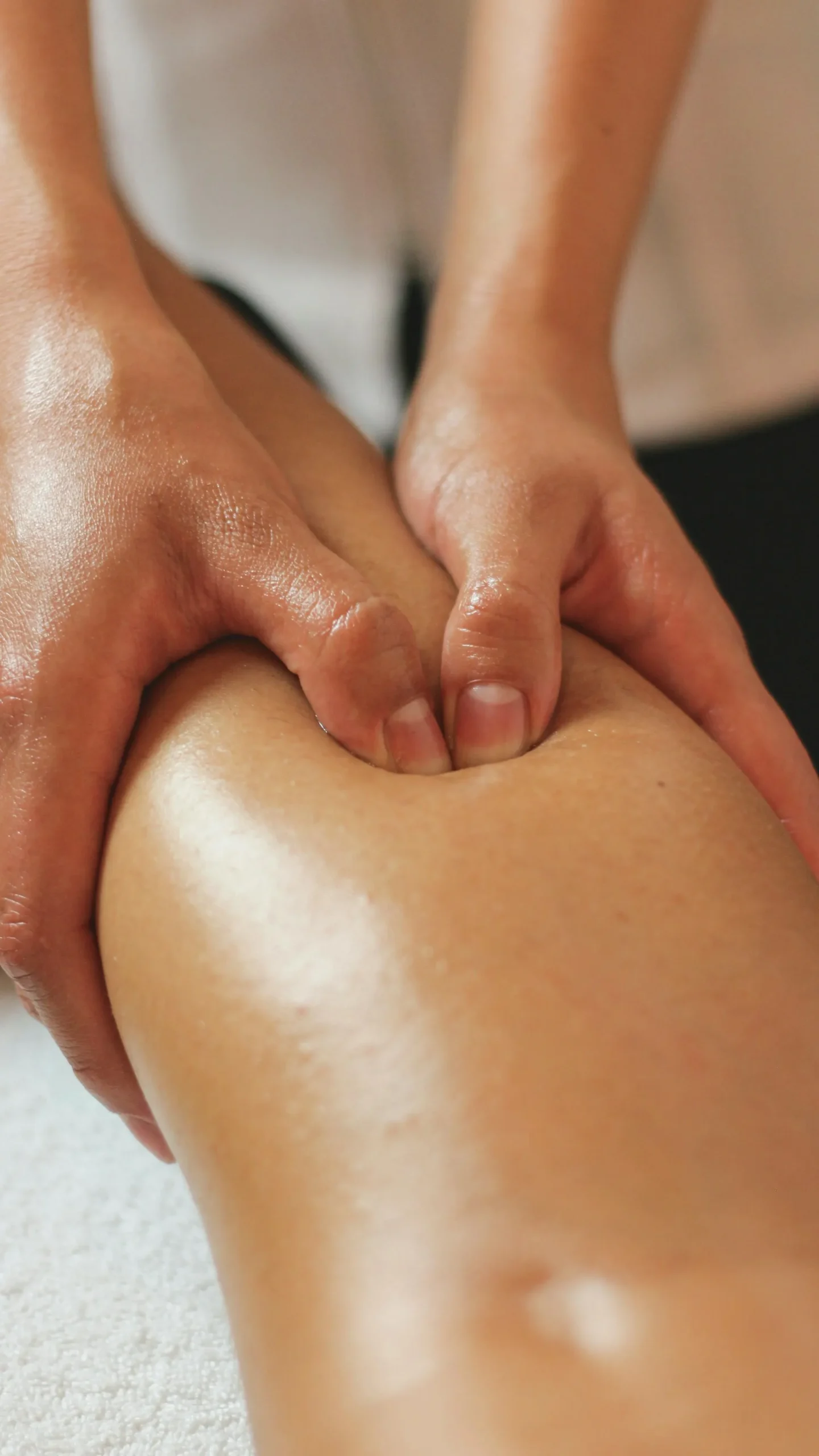
El drenaje linfático manual es una técnica suave que estimula el movimiento de la linfa a través de los vasos linfáticos.
Mediante movimientos muy precisos se favorece el transporte de la linfa hacia zonas donde el sistema linfático puede gestionarla mejor.
El objetivo es reducir el edema y mejorar la circulación linfática.
Vendaje multicapa
Durante la fase intensiva del tratamiento se utilizan vendajes multicapa.
Este tipo de vendaje se coloca después del drenaje linfático y ayuda a mantener el volumen reducido.
En la fase inicial suele utilizarse siempre después del drenaje, ya que mejora mucho la eficacia del tratamiento.
Cuando el volumen del miembro se estabiliza, el vendaje puede utilizarse con menor frecuencia o sustituirse por prendas de compresión.
Medias o mangas de compresión
Las prendas de compresión son una parte fundamental del tratamiento.
Se utilizan para mantener los resultados obtenidos durante la fase intensiva y evitar que el edema vuelva a aumentar.
Generalmente se recomienda el uso de medias o mangas de compresión cuando el volumen del miembro supera aproximadamente un 20 % respecto al miembro contrario.
El uso concreto dependerá de cada caso y de la evolución del paciente.
¿Cuánto dura el tratamiento del linfedema?
El tratamiento suele tener dos fases.
Fase intensiva
En esta fase el objetivo es reducir el volumen del miembro.
Durante este periodo se realizan sesiones frecuentes de drenaje linfático manual acompañadas de vendaje multicapa.
Fase de mantenimiento
Cuando el volumen se estabiliza, el tratamiento se centra en mantener los resultados.
En esta fase suelen utilizarse prendas de compresión y sesiones de drenaje de forma más espaciada.
¿Se puede hacer ejercicio con linfedema?
Sí, y de hecho es recomendable.
El ejercicio terapéutico ayuda a mejorar el funcionamiento del sistema linfático y favorece el retorno de la linfa.
Eso sí, el ejercicio debe realizarse de forma progresiva y guiada, especialmente cuando el linfedema está en fase activa.
Errores frecuentes en el tratamiento del linfedema
Uno de los problemas más frecuentes es abandonar el tratamiento cuando el volumen mejora.
El linfedema es una patología crónica y necesita mantenimiento.
Otros errores frecuentes son:
- no utilizar las prendas de compresión
- abandonar el ejercicio terapéutico
- esperar demasiado tiempo antes de consultar
¿Cuándo acudir a un fisioterapeuta especializado?
Es recomendable acudir a fisioterapia cuando se detecta:
- aumento de volumen en una extremidad
- sensación de pesadez persistente
- cambios en la piel
- antecedentes de cirugía o tratamiento oncológico
Una valoración temprana permite iniciar el tratamiento antes de que el edema se vuelva más difícil de controlar.
Tratamiento de linfedema
Si tienes dudas sobre el linfedema o sospechas que puedes tenerlo, una valoración individual permite estudiar cada caso y orientar el tratamiento más adecuado.